Celebrating Kwanzaa
Kwanzaa was created in the United States in 1966 by Dr. Maulana Karenga, a professor of Africana studies and a prominent figure in the Black Power movement, as a cultural holiday to celebrate African heritage, unity, and community among Black Americans.
*Karenga in Swahili means keeper of tradition
*Maulana in Swahili means teacher-master
Spelled Kwanza⬅️ and meaning ‘First’ in Swahili, Karenga spells it Kwanzaa ⬅️ with two a’s at the end instead of one.
The name Kwanzaa is taken from the Swahili phrase ‘matunda ya kwanza’ which means first fruits.
Drawing its roots from Swahili terminology, Pan-African ideas, and newly articulated principles known as the Nguzo Saba, Karenga designed Kwanzaa to foster collective identity, ethical values, and social responsibility during the week long observance from December 26 to January 1.
“Kwanzaa is not a religious holiday, nor is it meant to replace Christmas. It was created by Dr. Maulana Karenga, a professor of Black Studies, in 1966. At this time of great social change for African Americans, Karenga sought to design a celebration that would honor the values of ancient African cultures and inspire African Americans who were working for progress.” reelurbannews.com
Year End Harvests in Africa
Kwanza was based on year-end harvests that have taken place across Africa for thousands of years, drawing on longstanding agricultural traditions and communal celebrations.
Although there is not a single year-end harvest for the whole continent of Africa, because of the variation of each countries climate, upon looking at the East African crop calendar-Harvest time in Eritrea, Kenya, South Sudan, Zambia, and Uganda is in December.
West African December Harvest-Cameroon, Central Africa Republic, Chad, Congo, Cote d’ Ivoire, Gambia Ghana, Guinea, Guinea Bissau, Liberia, Mali, Niger, Senegal, Sierra Leone, Togo, Mauritania, Benin, Burkina Fauso-
South African December Harvest-Zambia
Crops
East and West Africa-Corn, Barley, Wheat, Cotton, Millet, Sorgham, Soybean, Peanut.
South Africa-Cotton *Most regions in South Africa are planting during East and West Africa’s harvest time.
*December is mid-season in most North African countries.
Nguzo Saba (‘Seven Principles’)
The seven core principles of Kwanzaa are articulated in the Swahili language, and they are
Umoja (Unity)
Kujichagulia (self-determination)
Ujima (Collective work and responsibility)
Ujamaa (Cooperative Economics)
Nia (Purpose)
Kuumba (Creativity)
Imani (Faith)
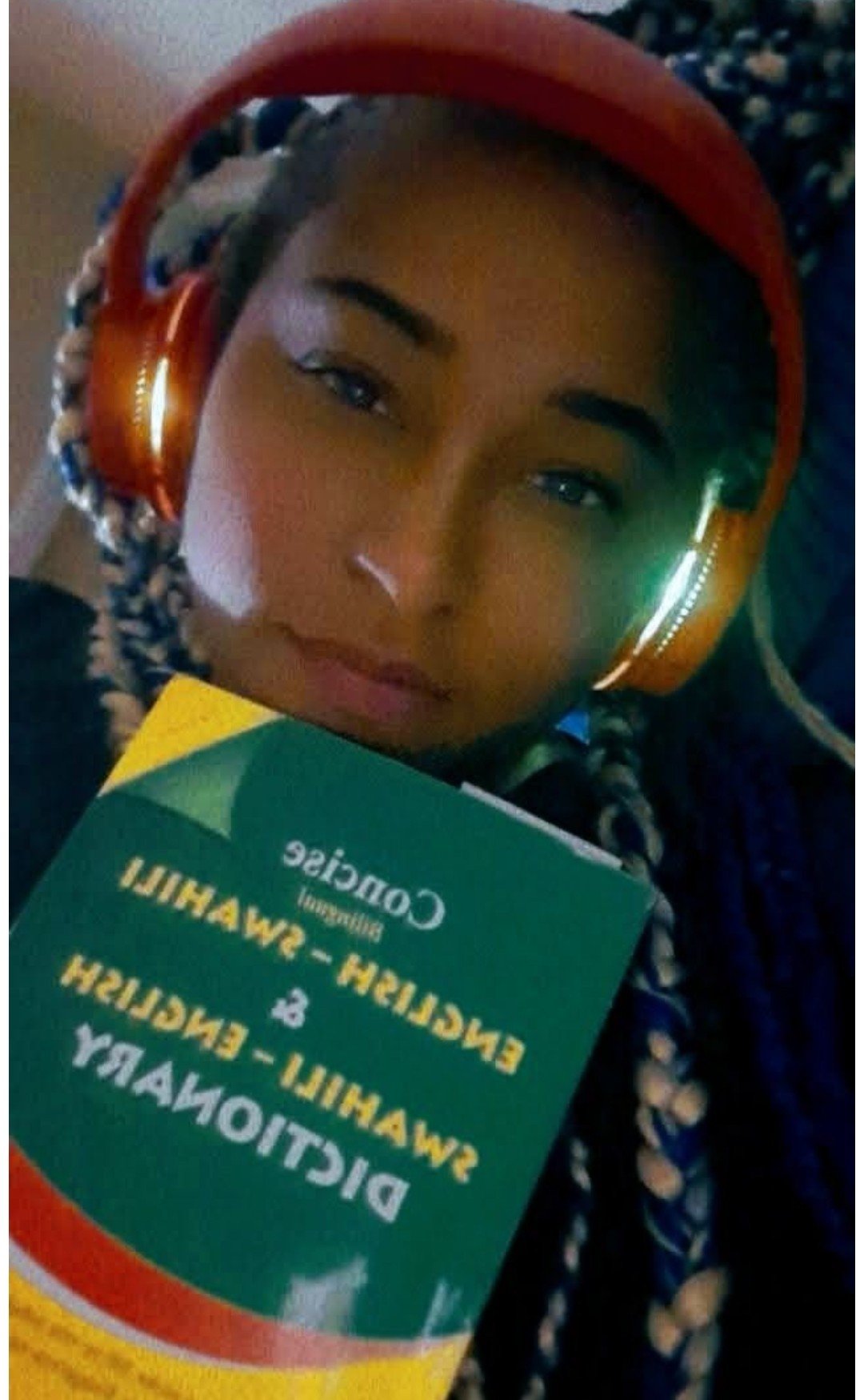
Did you know that Swahili is the most common spoken language in all of Africa?
Serving as a lingua franca across East and parts of Central and Southern Africa, Swahili is used natively by millions, and as a second language (because Africans have their own different tribal languages) by many more in countries such as Tanzania, (my second home) Kenya, Uganda, the Democratic Republic of Congo, Mozambique, and Rwanda.
Its rich vocabulary reflects centuries of trade and cultural exchange, incorporating Bantu roots, alongside Arabic, Persian, Portuguese, English, and other influences.
As an official or national language in several states, and a working language of regional bodies, Swahili facilitates commerce, education, media, and diplomacy, helping bridge ethnic and linguistic divides.
My Thoughts
Because of the widespread use and cultural resonance of the Swahili language across East Africa, I suspect this is why the founder of Kwanzaa chose to draw on Swahili principles.
Also, possibly because of the large Bantu migration, ( historians believe it occurred between 2000 BC-1500 CE) which means many Black Americans will have ancestral genetic roots tied to those regions.
(My own DNA test indicates some Bantu ancestry)
Zulu, Shona, and Xhosa which are languages spoken in South Africa, are also Bantu languages.
When studying, or listening to Zulu and Xhosa, you will hear and see familiar Bantu words-such as wewe (pronounced way-way) in Swahili meaning You. ..In Zulu, wena (pronounced way-na or weh-na) means You-in Shona, iwe (pronounced ee-weh) also means you.
About The Bantu Migration
The Bantu migration was a large, gradual population movement over many centuries from southern West Africa into Central, Eastern, and Southern Africa.
This widespread dispersal carried new technologies, improved farming methods, and related languages that profoundly shaped the region’s cultures and societies. Read more about The Bantu Migration here.
Integrating Swahili principles in the States really hits home for me as I continue to travel to East Africa and deepen my connections there.
Perhaps now, and in the years to come, Kwanzaa will take on an even richer, more personal, and more significant meaning to me.
Symbols Used for Celebrating Kwanzaa
-Kinara (7 Branch candle holder-red black and green)
-Mazao (crops-harvest) The harvest represents the years of hard work and labor.
-Muhindi (Ears of Corn) Represents the future generation and children.
-Mkeka (woven mat) Items representing black African history in the US are places on an Mkeka.
-Zawadi (gifts) Educational and African heritage gifts are given on the last day of Kwanza January 1-must always include a book.
Though Kwanzaa is rooted in African American culture, just as Americans and people from many countries join in Christmas, (Ancient Roman) Cinco de Mayo, (Mexican) St. Patrick’s Day, (Irish) Lunar New Year, (Chinese) Diwali (Indian) and Hanukkah, (Jewish) people from all around the world are also welcome to observe and celebrate Kwanzaa.
How Kwanzaa is Celebrated
Kwanzaa is celebrated over seven days with rituals that honor African heritage, community, and family.
Households decorate with symbols like the kinara (candleholder), a unity cup, and kente cloth.
Each evening a candle is lit to reflect one of the Nguzo Saba (seven principles) — Umoja (unity), Kujichagulia (self-determination), Ujima (collective work and responsibility), Ujamaa (cooperative economics), Nia (purpose), Kuumba (creativity), and Imani (faith).
Kwanzaa participants then discuss the principle of the day, and its meaning in their lives.
Celebrations often include music, drumming, storytelling, poetry, shared meals featuring traditional and Pan-African dishes-Karamu (on the 6th day) gift-giving-Zawadi (on the 7th day) that emphasizes education and cultural pride, and community ceremonies that reinforce mutual responsibility and cultural affirmation.
Some participants of Kwanzaa combine East and West African cultural music, symbols, food, and gifts.
Combining African traditions from across the continent makes sense, since many Black Americans do not know the exact location, tribe, or ethnic group their ancestors came from, because of the dispersal of African cultures during the slave trade.
Kwanzaa is a meaningful time for Black people in America to explore their roots, including using African ancestry services to learn more about their heritage.
*Visit the official Kwanzaa website at www.officalkwanzaawebsite.org This website has a ton of Kwanzaa insights, African traditions, quotes, and messages from leaders in Africa, ( love the fact that he highlighted a message from Tanzania’s former president Julius Nyerere in the article ‘Shared work and wealth’-Ujamaa) symbols, in depth information about what each day represents, the founders messages throughout the years, children’s participation, and much much more!
Are you celebrating Kwanzaa this year?